Share
Acrylic adhesive tape vs liquid acrylic adhesive in the United States
Quick Answer

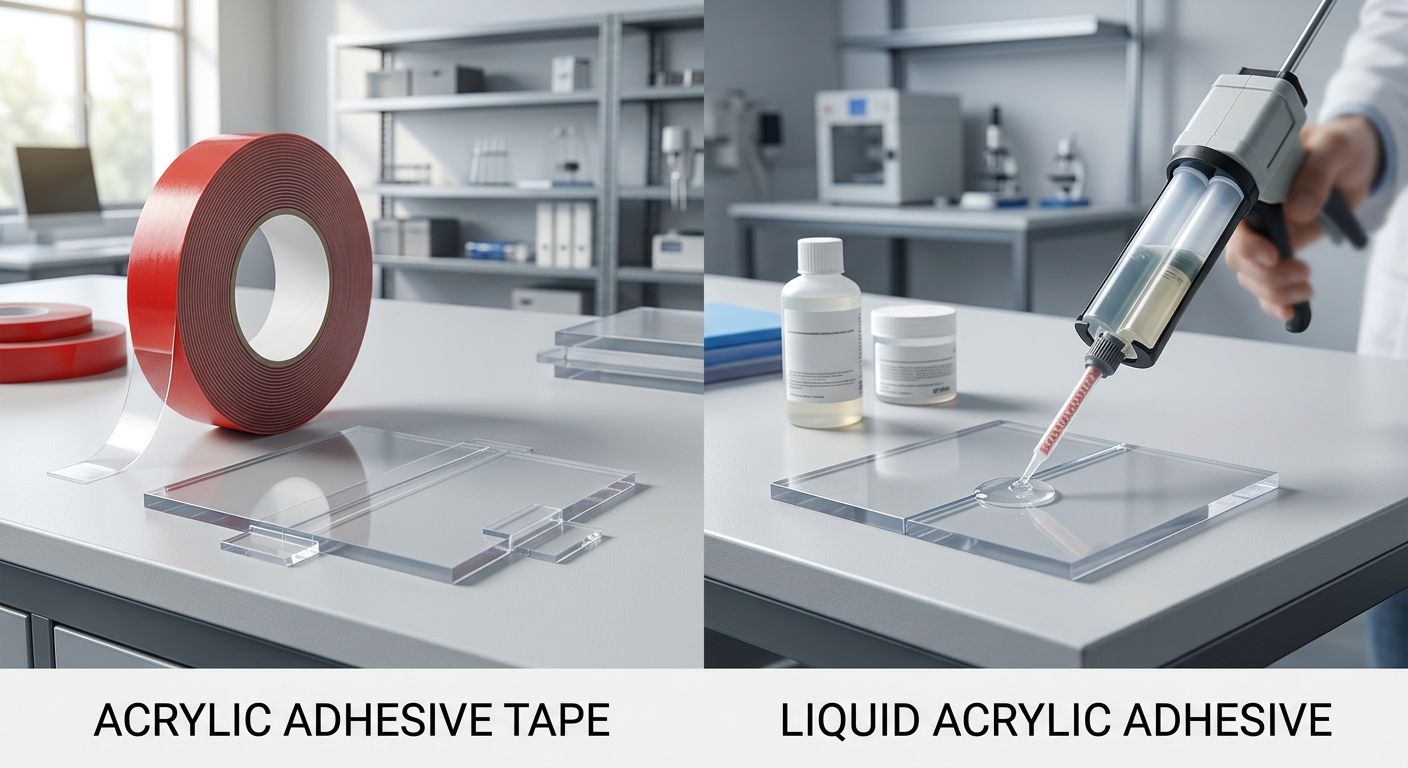
If you need fast assembly, clean handling, consistent bond-line thickness, and immediate tack on metals, plastics, glass, or powder-coated parts, acrylic adhesive tape is usually the better choice. If you need gap filling, structural load transfer across uneven surfaces, contour wet-out, or chemical mixing options for demanding assemblies, liquid acrylic adhesive is usually the better fit. In the United States, manufacturers in automotive, electronics, building products, signage, appliances, and general industrial assembly often choose tape for speed and appearance, while they choose liquid acrylic systems for higher structural demands or irregular joint geometry.
For immediate action, buyers in cities such as Detroit, Chicago, Houston, Los Angeles, and Atlanta can shortlist established local suppliers including 3M, tesa, Avery Dennison, HB Fuller, and Henkel. Tape is typically best for trim attachment, nameplates, display assembly, and panel bonding where clean conversion and fast throughput matter. Liquid acrylic adhesive is typically best for metal fabrication, transportation components, composite bonding, and assemblies where peel, impact, and gap-filling performance matter. Qualified international suppliers can also be worth considering, especially manufacturers from China that already comply with RoHS and REACH, operate under ISO-based quality systems, and provide strong pre-sales and after-sales support for the U.S. market because they often offer attractive cost-performance advantages without sacrificing consistency.
Market Snapshot in the United States

The U.S. adhesive market remains one of the most sophisticated in the world because it serves diverse production clusters: automotive in Michigan and Ohio, aerospace in Washington and Kansas, electronics in California and Texas, construction across the Sun Belt, and packaging throughout major logistics corridors near Chicago, Memphis, Savannah, and the Port of Los Angeles. Within this landscape, acrylic adhesive tape and liquid acrylic adhesive both benefit from demand for lightweighting, faster assembly, lower VOC exposure, and stronger bonding to mixed-material substrates.
Procurement teams across the United States are increasingly moving away from purely mechanical fastening for selected applications because bonded assemblies can reduce visible hardware, spread stress more evenly, improve appearance, and support thinner or lighter substrates. However, the choice between tape and liquid is rarely just about bond strength. It also depends on takt time, surface energy, operator skill, environmental resistance, rework needs, and the total installed cost on the production line.
Another U.S. market reality is logistics. Buyers near ports such as Long Beach, Houston, New York-New Jersey, and Savannah often prioritize supply continuity and inventory predictability. Converters and manufacturers that can slit, die-cut, private label, and warehouse products regionally usually gain an advantage because downtime in U.S. factories is expensive. This is why supplier evaluation should include technical support, lead times, and whether the provider can support both pilot runs and larger recurring volumes.
The growth pattern above reflects realistic market momentum driven by durable goods, electrification, building retrofits, and premium appearance requirements. Tape demand rises with automation and simplified assembly. Liquid acrylic demand rises with higher structural performance requirements, composite use, and replacement of welds or rivets in selected designs.
How the Two Options Differ

Acrylic adhesive tape is a pressure-sensitive product that arrives ready to use. It bonds when pressure is applied, often with foam or transfer constructions that help it conform to surfaces and manage stress. Liquid acrylic adhesive is usually a reactive system, including two-part structural acrylics or other liquid polyacrylate formulations, that cures chemically over time. That curing behavior gives liquid systems a different strength profile, different gap tolerance, and different process requirements.
The biggest mistake U.S. buyers make is comparing the two only on headline strength. In real production, tape can outperform expectations because it delivers repeatability, no mixing, low mess, rapid positioning, and excellent cosmetic outcomes. Meanwhile, liquid acrylic can outperform tape where the joint must bridge tolerances, carry higher loads, withstand demanding environmental cycles, or bond shapes that are difficult to laminate with die-cut tape.
| Decision Factor | Acrylic Adhesive Tape | Liquid Acrylic Adhesive | What It Means for U.S. Buyers |
|---|---|---|---|
| Application speed | Very fast, no mixing | Moderate, may require dispensing and cure time | Best for high-throughput plants in automotive trim, signs, and appliances |
| Gap filling | Limited, depends on foam thickness | Strong gap-filling ability | Important for metal fabrication and uneven joints |
| Cleanliness | Very clean process | More cleanup and process control needed | Helps reduce labor in consumer-facing assemblies |
| Immediate handling | High initial tack | Depends on open time and cure profile | Useful where line speed matters more than ultimate cure strength |
| Structural performance | Good in many permanent bonding uses | Usually better for heavy structural loads | Important in transportation, composites, and industrial frames |
| Surface conformity | Good with foam constructions | Excellent on irregular geometries | Matters for mixed materials and formed parts |
| Automation potential | High with liners, die-cuts, roll application | High with robotic dispensing | Choice depends on existing plant equipment |
This comparison matters because U.S. manufacturing costs are heavily influenced by labor, scrap, and uptime. Even if tape has a higher unit price per square foot in some cases, it may still lower installed cost. Conversely, even if liquid adhesive adds cure complexity, it may reduce redesign or warranty risk in more demanding joints.
Product Types You Will See in the U.S. Market
Within acrylic adhesive tape, U.S. buyers commonly encounter acrylic foam tape, transfer tape, double-sided film tape, and specialty high-bond constructions for automotive, glazing, electronics, and signage. Acrylic foam tape is popular because it combines bond strength with stress relaxation and sealing benefits. Transfer tape works well where minimal thickness is preferred. Filmic constructions can offer dimensional stability and clean die-cutting.
Within liquid acrylic adhesive, two broad families dominate many industrial decisions: structural acrylics and acrylic emulsions or pressure-sensitive liquids for specific converting uses. Structural acrylic AB systems are common where high strength and durable performance are needed. UV-curable acrylics are useful when light access exists and speed is critical. Threadlocking acrylics address fastener security rather than broad-surface bonding, but they remain part of the broader acrylic family used across U.S. industry.
| Product Type | Common U.S. Uses | Main Advantage | Main Limitation |
|---|---|---|---|
| Acrylic foam tape | Automotive trim, panels, signs, appliances | Fast bonding and stress distribution | Less ideal for large gaps or deep cavities |
| Acrylic transfer tape | Nameplates, thin laminations, graphics | Low profile and clean appearance | Requires good surface contact |
| Double-sided acrylic film tape | Electronics, displays, plastic assemblies | Dimensional stability | Less forgiving on rough surfaces |
| Two-part structural acrylic | Transportation, metal fabrication, composites | High strength and gap filling | Mixing and cure management required |
| UV-curable acrylic | Electronics, transparent parts, medical devices | Fast cure under light | Needs light access |
| Acrylic emulsion or PSA liquid | Labels, coatings, specialty converting | Flexible formulation options | Not a direct substitute for structural acrylic |
For buyers, the key is not just selecting tape versus liquid, but selecting the right subtype within each category. A plant in Indiana assembling metal cabinets may need a different acrylic solution than a California electronics converter or a Texas sign maker. That is why material compatibility testing remains essential before final approval.
Where Each Option Works Best
Acrylic adhesive tape usually works best when a buyer needs speed, clean application, and neat presentation. Examples include exterior trim, decorative panels, lightweight mounting, fascia, point-of-purchase displays, HVAC panels, interior transportation trim, and glass-to-metal or plastic-to-metal assemblies where foam tape can absorb movement. Tape also works well when pre-cut shapes reduce operator variability on the line.
Liquid acrylic adhesive usually works best when the joint has uneven surfaces, larger tolerances, higher peel and impact requirements, or higher structural expectations. Examples include truck and trailer assemblies, bus components, composite panels, machinery housings, metal brackets, battery enclosure components, and fabricated products that cannot be laminated efficiently with tape alone.
There are also hybrid applications. Many U.S. manufacturers use tape for temporary fixturing or appearance alignment and liquid acrylic for final structural reinforcement. This combined approach can help control shift during cure while preserving throughput.
The bar chart shows why supplier versatility matters in the United States. Demand is not concentrated in just one sector. Automotive and industrial equipment remain especially important, but building products, renewable energy, and electronics continue to influence material specifications and stocking strategies.
Buying Advice for U.S. Procurement Teams
Before selecting acrylic adhesive tape or liquid acrylic adhesive, procurement and engineering teams should define the real duty cycle. Consider whether the bond will see outdoor UV, winter-summer thermal cycling, fuel or solvent exposure, vibration, water ingress, or continuous load. Buyers should also define whether the assembly needs repositioning, immediate handling, long open time, flame or smoke considerations, dielectric behavior, or compliance with customer-specific standards.
In the United States, the true cost question is usually not price per roll or price per cartridge. It is installed cost plus risk. That includes line speed, skill requirements, scrap, cure delay, packaging waste, freight, shelf life, and claim exposure. A tape that eliminates drilling, reduces visible fasteners, and cuts labor can be a stronger business case than a cheaper liquid adhesive. A liquid acrylic that prevents field failure on a stressed joint can be a stronger business case than a faster tape.
| Buying Question | If Yes, Lean Toward Tape | If Yes, Lean Toward Liquid | Why It Matters |
|---|---|---|---|
| Is line speed critical? | Yes | No | Tape usually reduces process steps |
| Are surfaces uneven or gaps present? | Sometimes with foam tape | Yes | Liquid handles wider tolerances better |
| Is cosmetic finish highly visible? | Yes | Sometimes | Tape avoids squeeze-out and cleanup |
| Is high structural load expected? | Sometimes | Yes | Structural acrylic liquid systems often carry higher loads |
| Do you need easy automation? | Yes with roll or die-cut application | Yes with dispensing systems | Existing equipment determines best route |
| Is rework or trial placement important? | Sometimes | Depends on open time | Process control varies significantly |
| Are operators sensitive to mixing errors? | Yes | No | Tape removes ratio and pot-life variables |
It is smart to request bonded sample panels using your actual substrate pairings. In the U.S. market, reputable suppliers usually support application testing with aluminum, stainless steel, powder coat, ABS, PC, acrylic sheet, painted steel, FRP, and other common industrial materials. That practical testing often resolves debates faster than data-sheet comparisons alone.
Industries Driving Demand
Automotive remains one of the strongest drivers because bonding supports lightweighting, NVH control, design freedom, and aesthetic trim attachment. Detroit-area OEM and Tier suppliers have long used advanced tapes and liquid structural adhesives where assembly efficiency and durable performance intersect. Building products and construction also drive strong demand, especially for curtain wall accessories, panel mounting, weather-exposed components, and interior prefabricated assemblies. Electronics and electrical applications in California, Texas, and Arizona increasingly rely on precise acrylic bonding for displays, enclosures, thermal interface stack-up support, and component retention.
Packaging and furniture manufacturers in the Midwest and Southeast often choose acrylic tape for fast laminating, decorative assembly, and finishing operations. Renewable energy is a rising segment, especially with solar balance-of-system components, battery systems, and lightweight enclosure designs that benefit from corrosion avoidance and cleaner assembly methods.
Application Examples Across the United States
In Southern California signage and display fabrication, acrylic foam tape is often chosen to mount channel letter elements, panel faces, and trims because it keeps surfaces clean and avoids visible hardware. In the Midwest appliance sector, double-sided acrylic constructions help attach trim and badges with stable appearance over temperature swings. In Texas truck body and trailer manufacturing, liquid structural acrylic adhesives often provide more confidence when bonding dissimilar materials or reinforcing metal-to-composite joints. In coastal construction applications near Florida and the Gulf Coast, environmental resistance and sealing behavior can make acrylic foam tape attractive for selected exterior components, though testing against heat, moisture, and substrate movement remains essential.
For electronics assembly in Austin, San Jose, and Phoenix, thin acrylic transfer tapes often win where tolerance control, insulation spacing, and die-cut repeatability matter. Where optical clarity or very fast cure is needed and light exposure is available, UV acrylics may be preferred. In industrial equipment assembly around Ohio, Pennsylvania, and Illinois, two-part liquid acrylics remain popular when fixtures must withstand vibration and occasional chemical exposure.
Case Studies
A U.S. sign fabricator in Illinois switched from mechanical clips plus general-purpose liquid adhesive to acrylic foam tape on aluminum composite panels. The result was faster installation, less surface damage, cleaner appearance, and lower labor per unit. The company accepted slightly higher adhesive material cost because total assembly cost dropped and rework rates improved.
A truck body component producer in Texas evaluated high-bond acrylic tape against a two-part structural acrylic for bonding formed metal brackets to composite body sections. Tape worked well in lower-stress trim areas, but the structural acrylic performed better on joints with larger tolerance variation and repeated impact loading. The final design used both: tape for positioning and cosmetic components, liquid acrylic for structural reinforcement.
An electronics enclosure maker in California needed clean bonding for a thin display stack-up. A die-cut acrylic transfer tape outperformed liquid adhesive because it eliminated squeeze-out contamination, improved takt time, and fit the company’s semi-automated assembly process. The project demonstrated that precision and cleanliness can outweigh purely structural considerations.
The area chart highlights a practical market shift rather than a total replacement trend. U.S. factories are adopting more tape-based solutions where automation, appearance, and process simplicity matter, but liquid acrylic adhesives remain indispensable for structural or irregular applications. The market is expanding for both, with the mix changing by use case.
Local Suppliers and Major Brands Serving the United States
The United States has a strong adhesive supply ecosystem with global manufacturers, regional distributors, and converters. Buyers should evaluate not only brand recognition but also local inventory, converting capabilities, and technical response time. The table below highlights concrete options often considered in the U.S. market.
| Company | Service Region | Core Strengths | Key Offerings |
|---|---|---|---|
| 3M | Nationwide United States | Deep application engineering, broad product family, strong automotive and industrial presence | VHB acrylic foam tapes, transfer tapes, structural acrylic solutions |
| tesa | Nationwide with strong industrial support | Precision converting, electronics and automotive expertise, process-focused support | Acrylic foam tapes, transfer tapes, specialty mounting tapes |
| Avery Dennison | Nationwide United States | Materials science, converting compatibility, graphics and performance tapes | Performance tapes, transfer adhesives, industrial bonding solutions |
| HB Fuller | Nationwide with broad manufacturing footprint | Adhesive formulation depth, industrial customization, regional service | Liquid acrylic systems, specialty assembly adhesives, packaging solutions |
| Henkel | Nationwide, strong automotive and electronics reach | Structural bonding, Loctite brand authority, technical documentation | Structural acrylic adhesives, threadlockers, industrial assembly materials |
| Scapa | U.S. industrial and healthcare segments | Engineered tapes, custom solutions, converting and specialty formats | Double-sided acrylic tapes, foam tapes, engineered bonding products |
| Ellsworth Adhesives | Nationwide distribution and technical service | Multi-brand sourcing, lab support, process guidance | Structural acrylics, dispensing systems, application support |
This supplier landscape shows why purchasing decisions in the United States are often ecosystem decisions rather than one-product decisions. A strong supplier should help with substrate testing, dispensing or die-cut recommendations, warehousing, and conversion into usable production formats.
Supplier Comparison by Practical Decision Factors
This comparison does not suggest a single universal winner. Instead, it reflects a realistic view that buyers rate suppliers on multiple combined factors such as U.S. inventory, technical support, converting options, product breadth, and market familiarity. A national automotive supplier may choose differently from a regional sign fabricator or an electronics contract manufacturer.
How to Evaluate a Supplier Beyond Price
U.S. buyers should ask whether the supplier can support PPAP-style documentation where required, maintain lot traceability, offer consistent lead times, and provide application engineering support in the same time zone. For tape, it is important to ask about slitting widths, die-cut tolerances, liner options, adhesion build profile, and aging performance. For liquid acrylic adhesive, it is important to ask about mix ratio control, viscosity, open time, cure speed, exotherm, shelf life, and substrate-specific primer needs.
Another major issue is packaging scale. A distributor serving a Midwest maintenance team may need small rolls or cartridges, while an OEM in Tennessee or Georgia may need pallet quantities, custom labels, or private packaging. This affects the practical value of the supplier relationship more than catalog breadth alone.
Our Company in the U.S. Market
Buyers in the United States who are comparing established domestic brands with qualified overseas options can also consider QinanX as a practical manufacturing partner with real industrial adhesive breadth and export discipline. The company’s acrylic-related portfolio sits within a broader adhesive platform that includes structural acrylic AB adhesive, UV-curable adhesive, threadlocker, silicone, polyurethane, epoxy, hot melt, and water-based systems, which matters because U.S. customers often want one supplier that understands multi-material assembly rather than a single isolated product line. Its production and quality systems are backed by ISO-based management and compliance with international requirements such as RoHS and REACH, supported by multi-stage QC and digital traceability, which gives U.S. importers and brand owners concrete evidence of process control rather than generic quality claims. The company supports flexible cooperation models for end users, distributors, dealers, brand owners, and private-label programs through OEM, ODM, wholesale, retail-ready packaging, and regional partnership structures, making it suitable for both industrial projects and channel development. For U.S. market assurance, QinanX already serves customers in more than 40 countries, provides 24/7 technical assistance, free sample programs, formulation customization, and scalable automated production for recurring demand; combined with active online and offline pre-sales and after-sales support, this gives American buyers a workable long-term supply relationship rather than a one-off remote export transaction. Buyers who want to review the broader product range can visit the industrial adhesive catalog, learn more through the company overview, or request project-specific support through the U.S. inquiry contact page.
What U.S. Buyers Should Test Before Approval
Testing should reflect the actual end-use environment. For acrylic adhesive tape, evaluate peel adhesion, shear holding power, adhesion build over time, foam recovery, humidity resistance, UV exposure, and bond stability after thermal cycling. For liquid acrylic adhesive, evaluate lap shear, peel, impact, cure schedule, bead consistency, gap-filling behavior, and retained strength after environmental aging. If the bonded parts travel through e-coat, powder-coat, paint ovens, or field temperature extremes, the tests should mimic those conditions.
Many U.S. failures happen not because the adhesive chemistry is poor, but because the surface was contaminated or low-energy, the joint design was weak, or the application method was inconsistent. Surface preparation, primer selection, compression pressure, dwell time, and adhesive thickness can all change the outcome. That is why application training is as important as material selection.
Future Trends Through 2026
By 2026, the U.S. market will continue moving toward faster, cleaner, and more data-driven bonding systems. On the technology side, expect more die-cut, converter-ready acrylic tape formats designed for robotics, cobots, and vision-guided assembly. Expect liquid acrylic systems with better dispensing stability, faster fixture times, and improved bonding on modern coatings and composites. Electrification will also support growth because battery packs, lightweight housings, charging infrastructure, and thermal-management assemblies create new mixed-material bonding needs.
Policy and compliance trends also matter. More U.S. buyers are scrutinizing VOC profiles, chemical transparency, worker exposure management, and traceability throughout the supply chain. Sustainability pressure is influencing packaging reduction, lower-waste converting methods, and adhesive choices that can replace heavier mechanical joining or reduce downstream finishing steps. Buyers serving large OEMs or public-infrastructure projects should expect stronger documentation expectations around material compliance and sourcing consistency.
Another 2026 trend is supply-chain regionalization. U.S. buyers increasingly want partners that can combine competitive manufacturing economics with reliable communication, stable quality records, and flexible stocking support. That creates room not only for major domestic brands but also for internationally qualified manufacturers that can prove quality discipline, customization capability, and ongoing commercial commitment to the U.S. market.
FAQ
Is acrylic adhesive tape strong enough to replace screws or rivets?
In some U.S. applications, yes. High-bond acrylic foam tapes can replace mechanical fasteners in trim, panels, signage, and selected industrial assemblies. The answer depends on substrate, load direction, joint design, and environmental conditions.
When is liquid acrylic adhesive clearly better than tape?
When the joint has large gaps, irregular geometry, higher structural load, or demanding impact and peel requirements, liquid acrylic adhesive is usually the safer option.
Which option is better for outdoor use in the United States?
Both can perform well outdoors if properly specified. Acrylic foam tape is widely used outdoors because of UV and weather resistance, while structural liquid acrylics are often chosen when higher mechanical performance is needed.
What is usually easier for plant operators?
Acrylic adhesive tape is often easier because it requires no mixing and creates less mess. Liquid acrylics require more process control but can deliver stronger structural performance on difficult joints.
Can one supplier provide both tape and liquid acrylic solutions?
Yes, some large brands and capable manufacturers can support both categories directly or through channel partners. This is useful when a production line uses tape for appearance components and liquid acrylic for structural areas.
How should a U.S. buyer start the selection process?
Start with substrate list, joint design, environmental exposure, production speed target, and annual volume. Then request real sample testing with candidate suppliers and compare total installed cost, not just product price.
Final Takeaway
For most U.S. buyers, the simplest rule is this: choose acrylic adhesive tape when speed, cleanliness, appearance, and repeatability matter most; choose liquid acrylic adhesive when gap filling, contour bonding, and structural demands matter most. The best decision in the United States comes from matching the adhesive form to the process, the substrate, and the service environment, then validating with real application testing and a supplier that can support long-term production.

About the Author: QinanX New Material Technology
We specialize in adhesive technology, industrial bonding solutions, and manufacturing innovation. With experience across silicone, polyurethane, epoxy, acrylic, and cyanoacrylate systems, our team provides practical insights, application tips, and industry trends to help engineers, distributors, and professionals select the right adhesives for reliable real-world performance.

Product Category
You May Also Interest
-
IC Packaging Adhesive: Preventing Void Formation Issues
Learn how IC packaging adhesive void formation is prevented in the United States through material choice, process control, supplier selection, and testing.
-
Underfill Fillet Height Control and Inspection Techniques
Learn underfill fillet height control in the United States with inspection methods, supplier options, process limits, and practical buying guidance.
-
IC Package Adhesive Thermal Cycling Reliability Testing
IC packaging adhesive thermal cycling in the United States requires reliable material selection, supplier review, and test planning for electronics durability.
-
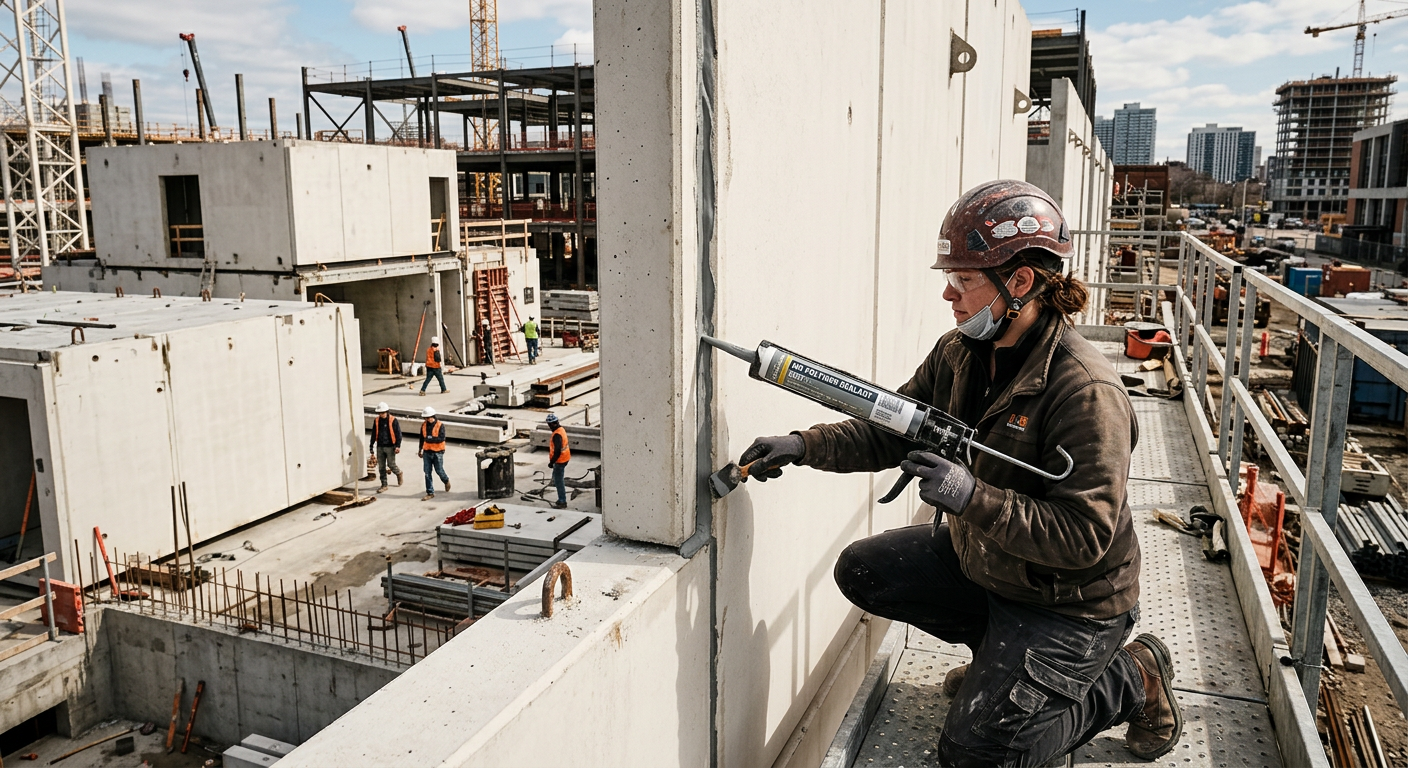
MS Polymer Sealant for Prefabricated Building Assembly
Find the best MS polymer sealant prefabricated building solutions in the United States, including suppliers, applications, buying tips, and market trends.
 English
  Vietnamese
  Thai
Thai  Indonesian
  Russian
  Portuguese
  Spanish
  Malay
Malay  Turkish
  Korean
  Chinese