
Share
Underfill Epoxy for BGA CSP Package Buyers in the United States
Quick Answer

If you need underfill epoxy for BGA and CSP package reinforcement in the United States, the most practical approach is to shortlist suppliers that already serve electronics assembly, semiconductor packaging, automotive electronics, and high-reliability industrial markets. In the U.S. market, Henkel, NAMICS, Master Bond, Panacol, and Zymet are among the most relevant names to evaluate because they are known for electronic adhesive materials, advanced packaging support, and technical documentation suitable for production environments.
For buyers in major electronics hubs such as California, Texas, Arizona, New York, and the Midwest manufacturing corridor, the best supplier is not always the largest brand. The right choice depends on capillary flow speed, reworkability, curing profile, reliability under thermal cycling, dispensing behavior, and compatibility with your BGA, CSP, flip-chip, or wafer-level package design. If your priority is fast line qualification in the United States, choose vendors with local application support, documented reliability data, and responsive logistics through domestic warehousing or distributor networks.
Qualified international suppliers can also be worth considering, especially when they combine compliance credentials, strong process control, and responsive support with better cost-performance. For example, buyers comparing U.S. and Asian sources may find value in reviewing specialized manufacturers through QinanX, especially for OEM, private label, and custom-formulation projects where both pricing discipline and technical flexibility matter.
United States Market Snapshot

The United States remains one of the most important markets for underfill epoxy in BGA and CSP package applications because it combines semiconductor design leadership, advanced EMS capacity, defense and aerospace electronics demand, EV electronics growth, and a broad installed base of industrial and medical device production. Demand is strongest in regions with deep electronics infrastructure: Silicon Valley and Southern California for design and prototyping, Texas for semiconductor and automotive electronics, Arizona for chip packaging and fabrication expansion, New York for advanced materials and optics, and the Southeast for automotive and appliance electronics.
Ports and trade hubs also shape sourcing decisions. Long Beach and Los Angeles remain critical gateways for imported materials and packaging inputs, while Houston supports petrochemical and industrial distribution, Chicago anchors central logistics, and New York/New Jersey continues to serve East Coast electronics and contract manufacturing networks. Buyers in the United States often balance local inventory availability with overseas production economics, especially when dealing with recurring adhesive consumption in medium- and high-volume lines.
Underfill epoxy demand is being pushed by several structural changes. Package miniaturization continues to increase mechanical stress sensitivity. Automotive control units and battery management systems require greater vibration and thermal shock resistance. Consumer and wearable devices demand thinner packages with tighter process windows. Medical and industrial electronics require stable dielectric behavior, low ionic contamination, and traceable manufacturing records. These realities make material selection more technical than price-driven alone.
The chart above reflects a realistic growth pattern rather than a speculative spike. The U.S. market has expanded steadily due to semiconductor packaging investment, reshoring initiatives, EV platform growth, and higher reliability requirements in edge electronics. For procurement teams, this means lead-time planning and second-source qualification are increasingly important, especially for adhesives used in continuous production.
Top Suppliers Serving the United States

The companies below are practical names for U.S. buyers evaluating underfill epoxy for BGA and CSP package reinforcement. The list includes established global brands with technical support relevant to U.S. electronics manufacturing as well as specialized suppliers known in adhesive and advanced packaging segments.
| Company | Primary Service Region | Core Strengths | Key Offerings | Best Fit |
|---|---|---|---|---|
| Henkel | United States nationwide and global | Large electronics materials portfolio, strong application engineering, qualified reliability data | Capillary underfills, no-flow underfills, edge bonding materials, package reinforcement solutions | High-volume electronics, automotive, industrial, semiconductor packaging |
| NAMICS | United States via technical and channel support | Strong reputation in semiconductor packaging materials, precision process compatibility | Underfill materials for CSP, BGA, flip-chip, advanced package assembly | Semiconductor packaging, fine-pitch and high-reliability assembly |
| Master Bond | United States, especially East Coast and nationwide OEM supply | Custom engineering capability, specialty epoxy expertise, U.S.-based technical response | Electronic grade epoxies, encapsulants, package reinforcement materials | Custom programs, industrial and medical electronics, lower to medium volumes |
| Panacol | United States and global electronics manufacturing markets | Precision adhesive systems, electronic assembly support, UV and thermal curing know-how | Electronic adhesives, package bonding and reinforcement materials | Precision electronics, optical and medical assemblies |
| Zymet | United States and selected international electronics markets | Electronic adhesive specialization, formulation flexibility, niche packaging support | Underfill-compatible adhesive systems, encapsulants, assembly materials | Custom electronics packaging and specialty applications |
| Epoxy Technology | United States and export markets | Engineered epoxies, documentation for critical applications, controlled material systems | Electronic grade epoxies, die attach and package support materials | Aerospace, defense, medical, high-spec assemblies |
This supplier table is useful because it separates companies by realistic procurement fit rather than brand visibility alone. Henkel and NAMICS are often favored for mature, highly documented electronics programs. Master Bond and Zymet become attractive when a buyer needs formulation flexibility or lower-volume technical collaboration. Panacol and Epoxy Technology are especially relevant in precise or regulated assemblies where process control matters as much as adhesive strength.
Product Types and Selection Logic
Underfill epoxy for BGA and CSP packages is not a single material category. Buyers should understand the main product forms because assembly method, throughput, package geometry, and reliability targets all affect the best choice.
| Product Type | How It Works | Main Advantage | Typical Limitation | Common U.S. Applications |
|---|---|---|---|---|
| Capillary underfill | Dispensed after solder reflow and drawn beneath the package by capillary action | Strong reinforcement with proven reliability history | Extra process step can reduce throughput | BGA boards, automotive modules, industrial controls |
| No-flow underfill | Applied before component placement and cures during reflow or post-reflow process | Supports faster integrated assembly workflow | Process window can be narrower than capillary systems | High-volume CSP and fine-pitch consumer electronics |
| Edge bond epoxy | Applied around corners or edges rather than filling the full gap | Lower material use and faster cycle time | Less full-package reinforcement than true underfill | Mobile electronics, tablets, cost-sensitive designs |
| Corner bond material | Reinforces package corners to improve drop and shock resistance | Useful for handheld device durability | Not ideal for severe thermal cycling alone | Wearables, consumer devices, compact boards |
| Reworkable underfill | Designed to allow package removal under defined service conditions | Improves repairability and lowers scrap risk | May trade off some extreme reliability metrics | Prototype builds, high-value assemblies, serviceable electronics |
| Low-stress specialty underfill | Formulated for CTE mismatch management and sensitive components | Reduces strain on fragile package structures | Can be more expensive and application-specific | Optoelectronics, sensors, specialty semiconductor modules |
The table shows why asking only for “underfill epoxy” is often not enough. A U.S. buyer should define package dimensions, substrate type, board finish, cure temperature ceiling, throughput expectation, and required reliability standard before requesting quotations. This prevents costly back-and-forth during qualification and helps suppliers recommend a realistic material instead of a generic catalog item.
Where Demand Is Coming From
In the United States, industry demand for BGA and CSP underfill is concentrated in sectors where solder joint fatigue, thermal cycling, vibration, and drop resistance directly affect warranty cost or mission success. Automotive electronics remains one of the strongest growth areas because control boards are exposed to under-hood heat, road shock, and extended life cycles. Aerospace and defense programs require traceability, stability, and long-term durability. Medical devices prioritize process consistency and regulatory documentation. Industrial automation depends on uptime in harsh operating environments.
The bar chart highlights why underfill strategy often differs by industry. Automotive and consumer electronics typically focus on throughput, reliability, and cost balance. Aerospace and medical buyers may accept higher material cost for tighter documentation, consistency, or specific performance envelopes. Industrial buyers often need a middle ground: robust reinforcement without a burdensome process change.
Buying Advice for United States Procurement Teams
For U.S. sourcing managers, contract manufacturers, and engineering teams, the first mistake is comparing underfill epoxy only by price per kilogram. The true cost driver is line performance. A lower-cost material can become more expensive if it flows too slowly, traps voids, creates warpage, requires an inconvenient cure schedule, or generates field failures under thermal cycling. For this reason, a proper RFQ should include package size, bump pitch, board stack-up, target dispense pattern, throughput expectation, reliability test plan, and storage conditions.
It is also important to verify whether the supplier can support pilot runs in domestic facilities or through quick-shipping inventory. U.S. buyers often need short lead times for engineering builds in California, Arizona, Texas, or Massachusetts before moving to broader production. The supplier that provides rapid samples, process suggestions, and failure analysis support can be more valuable than a nominally cheaper source with slower communication.
Documentation matters. Ask for TDS, SDS, ionic contamination data if available, cure profile recommendations, adhesion data on your substrate types, moisture sensitivity guidance, and thermal cycling performance. If your project serves automotive or regulated electronics, ask how the material aligns with RoHS, REACH, lot traceability, and production consistency. Buyers should also examine shipping and shelf-life realities, particularly for temperature-sensitive formulations that may move through U.S. ports and inland distribution channels.
Typical Applications in BGA and CSP Packaging
Underfill epoxy is used wherever solder interconnects need mechanical reinforcement against stress that the solder alone cannot reliably absorb over time. In BGA packages, underfill helps distribute stress across the package-to-board interface, reducing the concentration on solder balls during thermal expansion mismatch. In CSP applications, especially with thinner and lighter form factors, underfill can significantly improve drop resistance and field durability.
Practical U.S. application examples include automotive engine control modules in Detroit-linked supply chains, ADAS boards produced for assembly lines in the South, telecom boards in Texas, consumer wearables prototyped in California, medical diagnostic modules in the Northeast, and industrial control boards assembled across the Midwest. In each case, the material is selected not as a generic adhesive but as a process-critical reliability enabler.
| Application | Package Format | Main Stress Factor | Preferred Material Feature | Why Underfill Helps |
|---|---|---|---|---|
| Automotive ECU | BGA | Thermal cycling and vibration | High fatigue resistance and stable adhesion | Extends solder joint life in harsh service |
| Battery management board | CSP and BGA | Temperature swings and shock | Low-stress reinforcement with consistent cure | Improves package stability in EV systems |
| Consumer wearable | CSP | Drop impact and miniaturization stress | Fast flow and compact package support | Reduces failure from daily handling |
| Industrial controller | BGA | Continuous operation and mechanical stress | Long-term reliability and void control | Supports uptime in factory environments |
| Medical electronics module | CSP | Precision performance and reliability | Clean processing and traceable lots | Raises durability without compromising assembly control |
| Aerospace subsystem | BGA | Extreme service profile and long life | Documented reliability and stable thermal behavior | Protects interconnects in critical electronics |
This applications table matters because it links material choice to real failure mechanisms. When U.S. engineering teams align the adhesive feature with the dominant stress factor, they improve qualification speed and reduce later redesign costs.
Detailed Supplier Comparison for Practical Sourcing
Beyond simple brand recognition, buyers in the United States should compare suppliers on the basis of line compatibility, application engineering depth, supply assurance, and willingness to support qualification. The following comparison offers a grounded overview rather than a marketing ranking.
| Supplier | Service Model in the United States | Core Strength | Typical Lead-Time Advantage | Good For |
|---|---|---|---|---|
| Henkel | Direct and distributor-supported nationwide coverage | Broad electronics materials ecosystem and process support | Strong for recurring industrial demand and major accounts | Automotive, industrial, telecom, high-volume EMS |
| NAMICS | Technical support through market channels and packaging relationships | Semiconductor packaging specialization | Best when aligned with advanced packaging schedules | Chip packaging, high-density assembly, premium reliability |
| Master Bond | U.S.-based engineered supply and custom consultation | Flexible epoxy development and niche performance tuning | Useful for specialized projects and lower-volume programs | Medical, industrial, custom OEM requirements |
| Panacol | Global technical service with U.S. market support | Precision electronic adhesive knowledge | Suitable for technical builds needing process refinement | Optics, medical, precision devices |
| Zymet | Specialized support for electronic adhesive applications | Focused formulation capability | Helpful in targeted, application-specific opportunities | Specialty electronics, custom assembly needs |
| QinanX | Export-oriented supply with OEM, private label, and tailored support for U.S. buyers | Cost-performance, customization, scalable manufacturing | Competitive for planned procurement and branded projects | Distributors, brand owners, volume buyers, tailored adhesive programs |
This comparison is most useful when you map supplier style to your purchasing model. Large OEMs and multinational EMS providers may prioritize validated global platforms. Regional distributors, private-label buyers, and cost-sensitive assemblers may see stronger value in manufacturers that combine formulation flexibility with scalable production and export experience.
The comparison chart should not be read as an absolute ranking. It illustrates how buyers often weigh suppliers across documentation, customization, support response, price-performance, and production scalability. The best-performing supplier for one U.S. program may not be the best fit for another.
Case Studies from Realistic United States Scenarios
A Texas-based automotive electronics assembler qualifying a new BGA underfill typically starts with thermal cycling performance and throughput. In one realistic scenario, the team evaluated a standard capillary underfill against a lower-viscosity alternative. The standard material produced reliable joints but slowed line speed. The lower-viscosity option improved flow and reduced cycle time, but only after dispense path optimization and a modified post-cure schedule. The lesson was clear: material cost alone did not determine value; process integration did.
In California, a wearable-device startup using CSP packages needed better drop resistance without adding excessive process complexity. Instead of full underfill across all boards, the team adopted a selective reinforcement strategy for the most failure-prone locations during pilot production. This reduced scrap in field tests and gave the company time to decide whether a broader underfill process made economic sense at mass-production scale.
An industrial controls manufacturer in Ohio faced intermittent failures after extended thermal aging in plant-floor environments. Analysis showed solder fatigue aggravated by package-to-board expansion mismatch. After switching to a more suitable underfill with better stress distribution and validated cure consistency, the company reduced return rates and stabilized field performance across a wide temperature range.
In New York, a medical device manufacturer needed not only reinforcement performance but also documentation discipline. The selected supplier won the business because it offered lot traceability, clean handling guidance, and fast technical replies during validation. For regulated or semi-regulated environments, this kind of support can be decisive even when the material itself is not the lowest-cost option.
Our Company
For U.S. buyers looking beyond legacy brands, Qingdao QinanX New Material Technology Co., Ltd presents a practical option when the project requires a balance of compliance, customization, and supply flexibility. The company manufactures industrial adhesives under a structured quality system with ISO certification and compliance alignment for RoHS and REACH, backed by multi-stage quality control and digital lot traceability that matter in electronics sourcing. Its broader electronic and epoxy materials capability is supported by automated production lines and active R&D focused on custom formulations, which is useful when buyers need tailored flow behavior, cure profiles, packaging formats, or branded solutions rather than off-the-shelf-only choices. In the U.S. market, QinanX works through flexible cooperation models that suit end users, distributors, dealers, brand owners, and even smaller-volume private buyers, offering OEM, ODM, wholesale, retail-style fulfillment, and regional partnership opportunities through its export-experienced supply system that already serves customers in more than 40 countries. For local service assurance, the company supports projects with continuous pre-sale technical consultation, sample programs, and after-sale follow-up designed for real production use, giving American customers a more grounded purchasing experience than a simple remote export transaction. Buyers who want to review product scope or discuss fit for electronic adhesive programs can start through the company’s product catalog or reach the team directly via the United States inquiry page.
Trend Shift Toward 2026
By 2026, the U.S. underfill epoxy market for BGA and CSP packages is likely to be shaped by three major trends: tighter package density, stronger domestic electronics manufacturing policy support, and rising sustainability expectations. On the technology side, more compact and heterogeneous integration will demand lower-void processing, faster flow, better compatibility with fine-pitch structures, and lower-stress behavior for sensitive packages. On the policy side, U.S. semiconductor investment and supply chain resilience programs will continue to influence where packaging and assembly capacity expands, especially in Arizona, Texas, and New York. On the sustainability side, buyers will ask more questions about solvent content, process energy efficiency, waste reduction, packaging optimization, and responsible materials management.
The area chart reflects how fast the market is moving toward more advanced and more sustainable adhesive systems. In practical terms, this means future-ready buyers should qualify suppliers that can discuss not only current performance, but also roadmap issues such as lower-temperature curing, reduced process waste, better reliability analytics, and alignment with customer ESG expectations.
How to Choose the Right Supplier in the United States
Start with the package and the failure risk, not the catalog. If your board sees severe thermal cycling, prioritize materials with robust fatigue support and proven reliability data. If your production line is speed-sensitive, compare flow time and cure integration carefully. If rework is important, filter suppliers immediately for reworkable options. If your organization buys through approved vendor systems, evaluate domestic support responsiveness and document availability before trialing samples.
It also helps to separate prototype needs from production needs. A startup in San Jose may need sample agility and engineering feedback first, while a contract manufacturer in Dallas may prioritize recurring supply, lot consistency, and pricing across quarterly demand. A distributor serving the Midwest may value private-label and packaging flexibility, while a medical OEM in Boston may prioritize traceability and technical records above all else.
In many cases, the ideal procurement strategy is dual-path qualification: one globally recognized benchmark supplier and one cost-competitive alternative with strong technical discipline. This protects the buyer from supply disruption, strengthens price negotiation, and makes scale-up less risky.
FAQ
What is underfill epoxy used for in BGA and CSP packages?
It reinforces the gap between the semiconductor package and the PCB, helping solder joints resist thermal cycling, vibration, drop impact, and long-term fatigue.
Is capillary underfill better than no-flow underfill?
Neither is universally better. Capillary underfill is widely proven and often preferred for strong reinforcement, while no-flow systems can support faster integrated assembly when process conditions are well controlled.
Can underfill epoxy improve automotive electronics reliability?
Yes. In automotive modules, underfill often reduces solder fatigue caused by vibration and repeated temperature changes, which can significantly improve long-term field reliability.
Do U.S. buyers need local technical support?
In most cases, yes. Local or highly responsive support speeds up sample evaluation, dispense optimization, cure tuning, and troubleshooting during qualification and production transfer.
What certifications should I check when sourcing?
Ask for ISO-related quality system information, RoHS and REACH compliance where relevant, lot traceability details, and any reliability or contamination data needed for your end-use market.
Are international suppliers suitable for the United States market?
Yes, if they can demonstrate compliance, repeatable production, export experience, and dependable pre-sale and after-sale support. Cost-performance can be attractive, especially for OEM, ODM, and private-label programs.
How do I begin comparing suppliers?
Prepare a concise technical brief covering package type, board material, cure limits, reliability targets, annual volume, and whether you need standard, reworkable, or custom underfill. Then request samples and process guidance from shortlisted suppliers.

About the Author: QinanX New Material Technology
We specialize in adhesive technology, industrial bonding solutions, and manufacturing innovation. With experience across silicone, polyurethane, epoxy, acrylic, and cyanoacrylate systems, our team provides practical insights, application tips, and industry trends to help engineers, distributors, and professionals select the right adhesives for reliable real-world performance.

Product Category
You May Also Interest
-
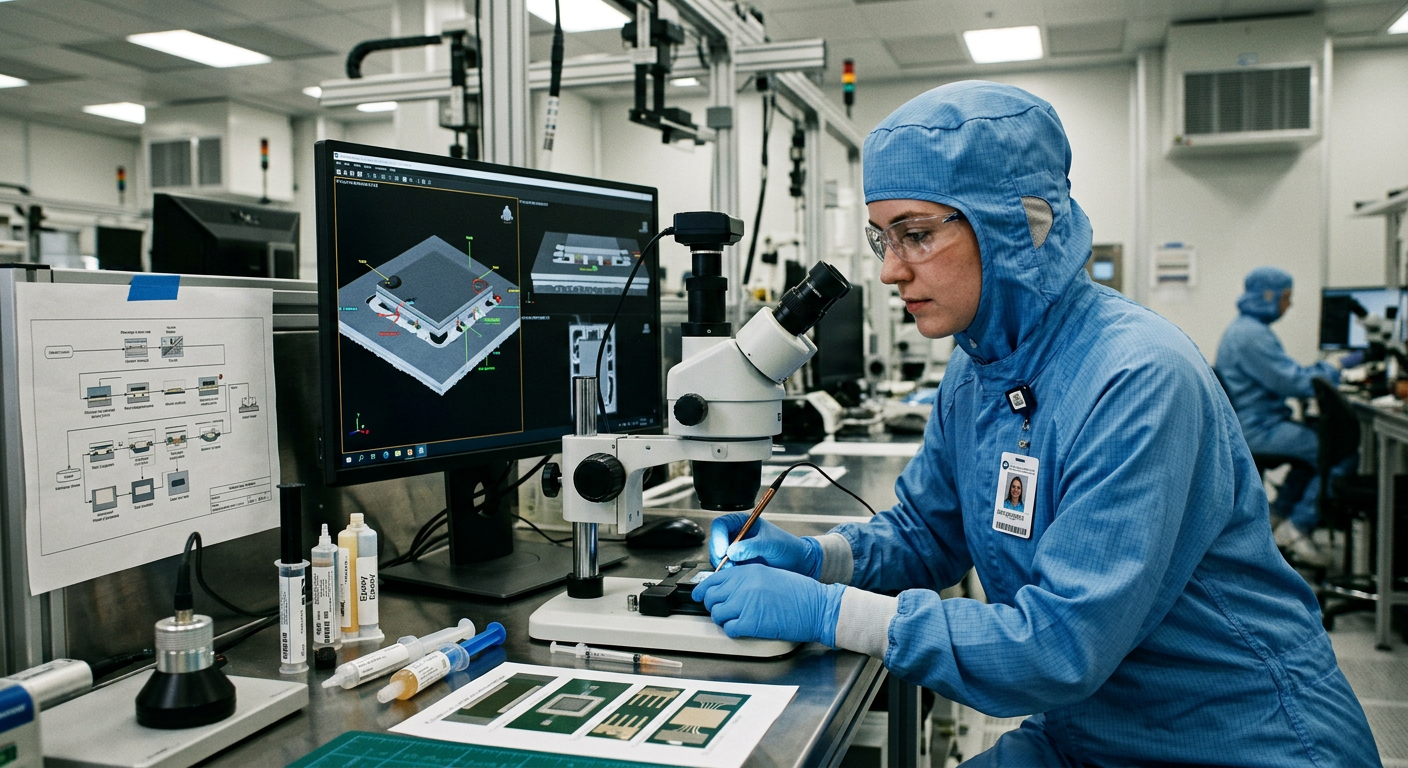
IC Packaging Adhesive: Preventing Void Formation Issues
Learn how IC packaging adhesive void formation is prevented in the United States through material choice, process control, supplier selection, and testing.
-

Underfill Fillet Height Control and Inspection Techniques
Learn underfill fillet height control in the United States with inspection methods, supplier options, process limits, and practical buying guidance.
-
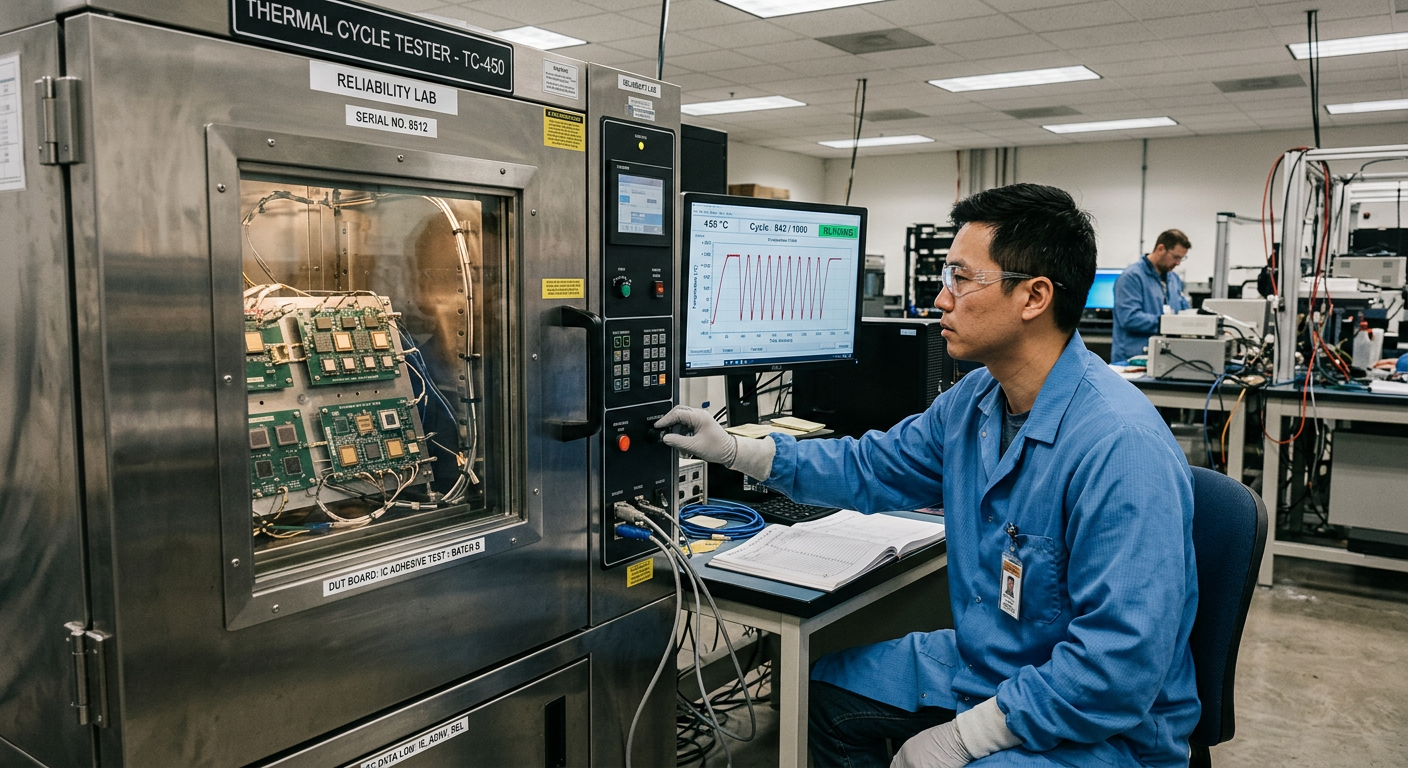
IC Package Adhesive Thermal Cycling Reliability Testing
IC packaging adhesive thermal cycling in the United States requires reliable material selection, supplier review, and test planning for electronics durability.
-

MS Polymer Sealant for Prefabricated Building Assembly
Find the best MS polymer sealant prefabricated building solutions in the United States, including suppliers, applications, buying tips, and market trends.
 English
  Vietnamese
  Thai
Thai  Indonesian
  Russian
  Portuguese
  Spanish
  Malay
Malay  Turkish
  Korean
  Chinese