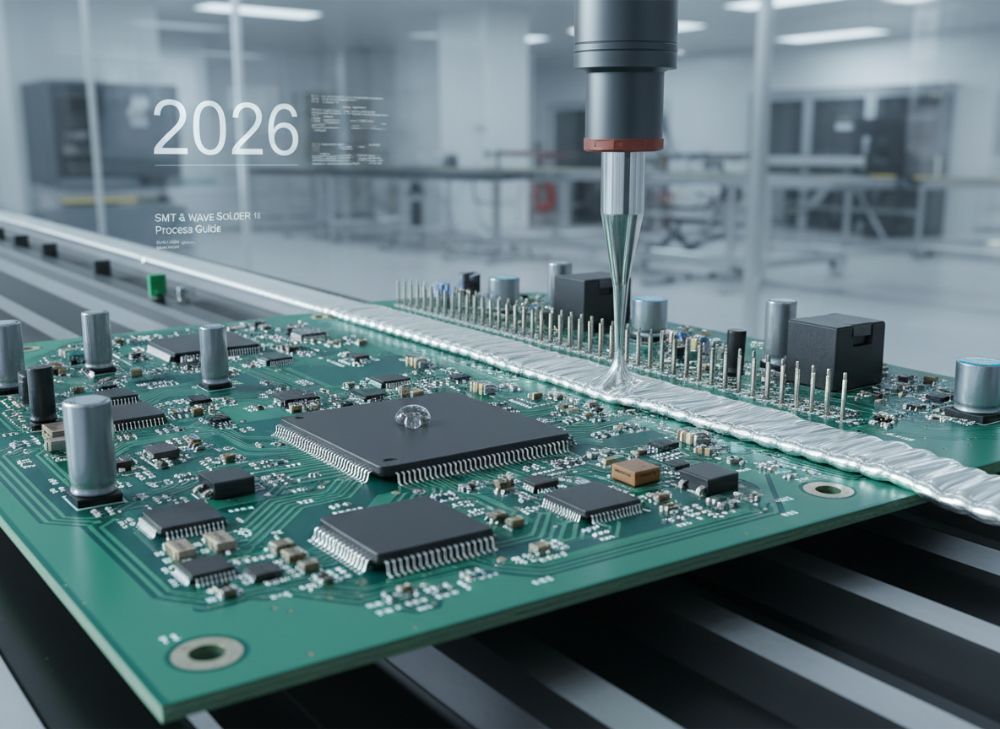
Share
Potting Compound EV Battery Management Solutions in the United States
Quick Answer

If you need a potting compound for EV battery management system PCBs in the United States, the most practical options usually come from established materials suppliers with proven electronics and automotive experience, especially those supporting thermal management, vibration resistance, dielectric insulation, and long-term reliability. For BMS boards used in electric vehicles, buyers commonly shortlist Henkel, 3M, Dow, Master Bond, Chase Corporation, and MG Chemicals because these companies offer recognized product lines for electronic encapsulation, thermal interface performance, and industrial qualification support.
For buyers in Detroit, Austin, San Jose, Atlanta, and other U.S. manufacturing hubs, the best choice depends on whether the design priority is heat dissipation, flame resistance, low stress on components, reworkability, or cost control at scale. Silicone potting compounds are frequently selected for flexible stress relief and wide temperature cycling, while epoxy systems are often preferred for mechanical strength and chemical resistance. Polyurethane options can be useful where balanced toughness and processability matter.
Top U.S.-relevant suppliers to review first include Henkel, 3M, Dow, Master Bond, Chase Corporation, and MG Chemicals. Qualified international suppliers can also be considered, especially when they provide RoHS and REACH compliance, stable OEM supply, and responsive pre-sales and after-sales support. Cost-performance is often a major advantage for buyers sourcing larger EV battery programs or private-label product lines.
United States Market Overview

The United States market for EV battery management materials is expanding alongside domestic battery pack assembly, power electronics investment, and state-level incentives for cleaner transport. As more EV production and battery integration move closer to U.S. end markets, demand for dependable encapsulation materials is rising in regions such as Michigan, Ohio, Tennessee, Texas, California, Georgia, and the Carolinas. These areas are closely tied to automotive engineering, electronics assembly, and logistics routes through ports such as Los Angeles, Long Beach, Savannah, Houston, and New York-New Jersey.
Battery management system PCBs operate in a challenging environment. They must handle thermal cycling, moisture exposure, road vibration, salt spray risk, and electrical stress while maintaining stable sensing and communication performance. Potting materials help protect components such as microcontrollers, shunt resistors, connectors, and voltage monitoring circuits from contamination and mechanical shock. In EV battery packs, the compound also contributes to manufacturability and product lifespan, particularly where the design involves compact enclosures and demanding safety validation.
Across the United States, buyers are becoming more selective. They now expect not only insulation and sealing, but also better thermal conductivity, lower volatile emissions, simpler dispensing, and documented compliance with automotive and electronics requirements. Procurement teams also want shorter lead times, predictable batch consistency, and supplier support for formulation adjustments. This is especially true for companies operating pilot lines before scaling to multi-state production footprints.
Another notable market shift is the increased overlap between automotive OEM requirements and energy storage system standards. Many buyers who develop EV battery modules also evaluate materials for charging systems, battery disconnect units, auxiliary control boards, and adjacent electronics. This broadens the role of potting compounds from a niche protective material into a strategic component of reliability engineering.
Estimated U.S. Market Growth for EV BMS Potting Materials
The chart below shows a realistic directional view of growing demand as EV manufacturing capacity, battery pack localization, and electronics integration increase through 2026.
Leading Suppliers Serving the United States

The supplier landscape in the United States includes global chemical groups, specialized electronics formulators, and technical adhesive companies supporting automotive qualification. The table below summarizes practical options for EV battery management system potting applications.
| Company | Service Region | Core Strengths | Key Offerings | Best Fit |
|---|---|---|---|---|
| Henkel | United States nationwide | Automotive-grade materials, broad engineering support, global validation resources | LOCTITE electronic encapsulants, thermal materials, sealants | OEM and Tier 1 EV programs |
| 3M | United States nationwide | Advanced materials portfolio, process integration, strong industrial distribution | Electrical insulation materials, thermal management solutions, adhesives | High-volume manufacturing and diversified sourcing |
| Dow | United States and North America | Silicone expertise, thermal stability, environmental resistance | Silicone encapsulants and potting materials for electronics | Wide temperature cycling and low-stress designs |
| Master Bond | United States and export markets | Specialty formulations, technical customization, niche performance options | Epoxy, silicone, and polyurethane potting compounds | Custom engineering projects and demanding specs |
| Chase Corporation | United States industrial sectors | Protective materials, durability, industrial application know-how | Encapsulation compounds and electrical protection materials | Industrial EV subsystems and rugged environments |
| MG Chemicals | United States via distribution network | Accessible electronics materials, lab-to-production flexibility | Potting compounds, conformal coatings, thermal products | Prototype, maintenance, and smaller-scale assembly |
| Qingdao QinanX New Material Technology Co., Ltd | United States through export and customer support channels | OEM and private label flexibility, broad adhesive portfolio, cost-performance | Electronic potting compounds, silicone, epoxy, polyurethane adhesive systems | Import buyers, distributors, and branded product programs |
This comparison helps buyers match supplier capability to project stage. Large OEM platforms often prioritize validation depth and application engineering, while growing brands, regional distributors, and private-label buyers may focus more on supply flexibility, customization, packaging, and total landed cost.
Product Types for EV Battery Management System PCBs
Potting compound selection for EV battery management boards usually starts with three material families: silicone, epoxy, and polyurethane. Each behaves differently under thermal cycling, vibration, cure shrinkage, and chemical exposure. A material that performs well in a stationary control box may not be suitable inside a battery pack where vibration, heat, and enclosure density are more severe.
| Material Type | Main Benefits | Key Limitations | Typical EV BMS Use | Selection Priority |
|---|---|---|---|---|
| Silicone | Excellent flexibility, thermal cycling resistance, weather resistance | Lower mechanical rigidity than epoxy | Sensitive PCB assemblies and harsh temperature environments | Stress relief and reliability |
| Epoxy | Strong adhesion, high mechanical strength, chemical resistance | Higher modulus can stress delicate components | Rigid enclosure designs and strong environmental protection | Structural robustness |
| Polyurethane | Balanced toughness, good moisture resistance, useful process window | Temperature range may be narrower than silicone | General automotive electronics and balanced performance needs | Versatility |
| Thermally Conductive Silicone | Heat dissipation plus elasticity | Can cost more than standard grades | Compact BMS layouts with heat concentration | Thermal control |
| Flame-Retardant Epoxy | Improved safety profile and robust encapsulation | May require careful dispensing and cure control | Safety-focused battery modules | Fire performance |
| Low-Viscosity PU | Good flow around dense components and connectors | May need stricter moisture handling during processing | Complex assemblies with narrow gaps | Penetration and coverage |
In practice, many U.S. buyers begin with a thermal and mechanical requirement map before requesting samples. If the board includes fragile solder joints or high component density, silicone often becomes the first candidate. If the enclosure is rigid and the assembly needs strong chemical or abrasion resistance, epoxy becomes more attractive. Polyurethane can sit in the middle where balanced flexibility, adhesion, and process economy are desired.
How Demand Differs by Industry
Not every buyer uses EV-grade potting compounds in the same way. Automotive OEMs, battery pack integrators, charger manufacturers, and energy storage firms each evaluate materials through a different lens. The bar chart below illustrates estimated relative demand by application sector in the United States.
Battery packs remain the largest demand center because BMS electronics sit at the heart of cell balancing, monitoring, and safety logic. However, adjacent sectors are expanding quickly. U.S. charging infrastructure projects, heavy-duty fleet electrification, and energy storage deployments are all creating additional demand for reliable electronic encapsulation.
Buying Advice for U.S. Buyers
For procurement teams and engineers in the United States, selecting the right potting compound is less about marketing claims and more about matching material behavior to the actual assembly environment. Start with five questions. First, what temperature range will the BMS experience under normal operation and fault conditions? Second, how much heat must be removed from enclosed components? Third, how sensitive are the PCB and solder joints to stress? Fourth, what ingress risks exist from moisture, dust, salt, or chemicals? Fifth, what production process is planned for mixing, dispensing, curing, and inspection?
Buyers should also confirm whether the material needs flame-retardant properties, UL-recognized attributes, low outgassing, or compatibility with neighboring plastics and connector seals. In domestic projects tied to automotive validation, documentation quality can be just as important as raw performance. Technical data sheets, safety data sheets, lot traceability, and cure process guidance all affect the speed of qualification.
Lead time resilience is another practical factor. U.S. manufacturers with plants in multiple states often prefer suppliers that can support both prototype and production volumes without forcing a second qualification later. Regional warehousing, distributor availability, and local technical support matter when a program is moving quickly from pilot builds to scaled output.
| Buying Factor | Why It Matters | Questions to Ask Supplier | Risk If Ignored | Best Buyer Type |
|---|---|---|---|---|
| Thermal Conductivity | Controls heat around power components and dense PCB layouts | What conductivity range is available and verified? | Hot spots and reduced lifespan | OEMs and battery integrators |
| Low Stress Modulus | Protects solder joints and sensitive electronic parts | How does the material behave during thermal cycling? | Cracking and intermittent failure | Electronics designers |
| Flame Retardancy | Supports safety-focused pack design | Which fire-performance standards are met? | Qualification delays | Automotive and ESS buyers |
| Processability | Affects dispensing speed, void control, and scrap rate | What is the viscosity, pot life, and cure profile? | Production inefficiency | Manufacturing teams |
| Compliance Documentation | Supports audits and customer approval | Are RoHS, REACH, and traceability records provided? | Procurement and audit risk | Brand owners and exporters |
| Supply Flexibility | Ensures continuity from sample to scale | Can the supplier support pilot and full production volumes? | Requalification and delay | Scaling manufacturers |
| Local Support | Speeds troubleshooting and onboarding | Is there U.S. sales or technical response coverage? | Longer downtime and poor communication | All buyer types |
This table can serve as a practical RFQ checklist. It keeps the supplier conversation tied to measurable factors instead of generic product claims.
Industries Using BMS Potting Compounds
The core market is electric vehicles, but the same encapsulation technologies are used across several closely related industries in the United States. Passenger EVs, electric buses, trucks, warehouse vehicles, and utility fleets all need dependable battery control electronics. The growth of domestic battery assembly around Detroit, Toledo, Nashville, Austin, and Phoenix further strengthens regional demand for application-specific formulations.
Energy storage systems are another important segment. Utilities and commercial building operators increasingly deploy lithium battery systems that use management boards exposed to thermal loads, vibration during transport, and long operational duty cycles. While the duty profile may differ from an automobile, the material selection logic is similar: thermal control, dielectric protection, environmental sealing, and stable long-term performance.
Charging infrastructure, marine electrification, robotics, and specialty industrial mobility also contribute to demand. In all of these sectors, engineers seek reliable materials that reduce field failures and simplify assembly. That is why potting compound choice now influences not only protection but also product warranty risk and maintenance cost.
Common Applications in EV Battery Management
Within an EV battery system, potting compounds are used in more places than many buyers initially expect. The most obvious application is full or partial encapsulation of BMS PCBs inside battery packs. However, the same family of materials may also be used around current sensing areas, connector transitions, communication modules, battery disconnect electronics, auxiliary power boards, and control modules exposed to harsh service conditions.
For high-density boards, a low-viscosity potting material can improve flow around fine-pitch components and reduce trapped voids. For modules with thermal concentration, a thermally conductive grade can help move heat away from critical components toward the enclosure. For designs with mixed materials such as metal housings, plastics, and elastomeric seals, compatibility and cure behavior are especially important.
Another common application is vibration stabilization. In battery packs used in light commercial vehicles or off-road equipment, repeated mechanical stress can degrade solder joints and connector reliability over time. Potting adds support and environmental isolation, helping electronics survive longer in mobile conditions.
Material Trend Shift Through 2026
U.S. demand is gradually shifting toward materials that combine thermal performance, lower stress, and improved sustainability profiles. The area chart below shows a realistic pattern in which advanced silicone and hybrid systems gain share as battery electronics become more compact and more thermally demanding.
Case Studies and Practical Scenarios
A battery module assembler in Michigan may prioritize validated materials with strong lot traceability and rapid engineering response because the program is tied to an automotive customer with strict launch timing. In that case, thermal conductivity, cure consistency, and domestic logistics are often more important than lowest unit cost.
A fast-growing EV retrofit company in Texas may instead need a supplier that can support small pilot batches, custom packaging, and quick formulation adjustments before moving into volume contracts. Flexibility and technical consultation become key decision points.
A charging equipment manufacturer in California may choose a lower-stress silicone encapsulant because the board experiences outdoor temperature shifts and needs stronger resistance to moisture and UV-adjacent conditions, even if it is not mounted directly inside a traction battery pack.
An energy storage integrator in Georgia may prefer a flame-retardant epoxy or hybrid system for enclosed electronics where mechanical reinforcement and resistance to dust, humidity, and service handling matter more than reworkability.
These examples show why the “best” potting compound depends on the combination of thermal load, environmental exposure, service model, and manufacturing process. Materials should be shortlisted against actual operating conditions rather than broad category assumptions.
Local and U.S.-Relevant Supplier Comparison
The following table gives a more decision-oriented view of how suppliers align with common U.S. buyer priorities.
| Supplier | Typical Buyer | Service Strength in U.S. | Product Focus | Commercial Advantage |
|---|---|---|---|---|
| Henkel | Automotive OEM, Tier 1 | Strong technical support and industrial footprint | Automotive electronics and thermal materials | Qualification depth |
| 3M | Large manufacturers, multi-site buyers | Broad channel access and brand recognition | Insulation, bonding, thermal and protective materials | Procurement convenience |
| Dow | Electronics and automotive programs | Reliable North American coverage | Silicone encapsulation and environmental protection | Temperature resilience |
| Master Bond | Engineers with specialized requirements | High-touch technical engagement | Custom epoxy, silicone, PU formulations | Application tailoring |
| MG Chemicals | Smaller manufacturers, repair, prototype teams | Easy distribution access | Electronics potting and coatings | Accessibility and speed |
| Qingdao QinanX New Material Technology Co., Ltd | Importers, distributors, private-label brands, flexible-volume users | Export experience and direct support for overseas clients | Electronic potting compound, silicone, epoxy, PU, and broader adhesive lines | Customization and cost-performance |
This comparison is useful when aligning material strategy with business model. A national vehicle platform and a regional adhesive distributor do not evaluate suppliers in the same way, even if they use similar chemistry.
Our Company in the United States Market
For U.S. buyers evaluating qualified international options, Qingdao QinanX New Material Technology Co., Ltd brings a practical combination of verified product capability and commercial flexibility for EV battery management potting projects. Its electronic potting compounds are backed by ISO-based manufacturing discipline, RoHS and REACH compliance, multi-stage quality control, and full digital traceability, supported by broad formulation experience across silicone, epoxy, polyurethane, acrylic, and related industrial adhesive systems. That range matters because U.S. customers often need one supplier that can support multiple protective and bonding materials across the same vehicle electronics program. The company works with end users, distributors, dealers, brand owners, and smaller independent buyers through OEM, ODM, wholesale, private label, and tailored packaging models, which makes it suitable for both direct industrial sourcing and regional channel partnerships. Through its established export activity in more than 40 countries, automated production lines, free sample programs, and 24/7 technical assistance, the company supports U.S. customers with concrete pre-sales formulation matching and after-sales troubleshooting rather than one-time remote quoting. Buyers exploring electronic potting compound solutions can also review the firm’s manufacturing background on the company profile page and request specification matching or distributor discussion through the U.S. inquiry contact channel, which helps demonstrate long-term commitment to serving this market with repeatable supply, documentation, and responsive technical follow-up.
Future Trends Through 2026
By 2026, three trends are likely to shape potting compound decisions for EV battery management systems in the United States. The first is thermal intensification. As electronics become denser and battery systems more integrated, thermally conductive yet lower-stress materials will gain importance. This favors advanced silicone, hybrid formulations, and better filler technology.
The second trend is policy and localization pressure. Federal and state incentives, domestic manufacturing strategies, and supply chain resilience goals will continue to push material qualification closer to North American production ecosystems. Suppliers able to document stable sourcing, compliance, and predictable lead times will have an advantage.
The third trend is sustainability. Buyers are increasingly asking about lower-emission production, safer handling, efficient packaging, and formulation strategies aligned with global environmental expectations. Even when sustainability is not the top purchase criterion, it increasingly affects supplier screening and long-term approval.
There is also a subtle but important shift toward more integrated supplier relationships. Instead of buying a single encapsulant in isolation, manufacturers increasingly prefer suppliers that can support a package of materials across electronics sealing, thermal management, structural bonding, and coating needs. This reduces qualification complexity and can streamline quality control across production sites.
Supplier and Product Comparison Snapshot
The chart below compares realistic relative scores for key purchase criteria among common sourcing approaches in the United States. It is not a lab test, but a practical procurement view.
Frequently Asked Questions
What is the best potting compound type for EV battery management PCBs?
There is no universal best type. Silicone is often preferred for low stress and temperature cycling, epoxy for rigidity and chemical resistance, and polyurethane for balanced performance and processability.
Do U.S. buyers usually require automotive-grade documentation?
Yes. For serious EV applications, buyers commonly request technical data sheets, safety data sheets, compliance declarations, traceability details, and cure process guidance. Validation support often influences supplier choice.
Is thermal conductivity always necessary?
Not always, but it becomes more important when component density is high or the enclosure retains heat. A standard insulating potting compound may be enough for lower-power boards, while compact BMS designs often benefit from thermally conductive grades.
Can international suppliers compete in the United States market?
Yes. Qualified international manufacturers can be competitive when they offer compliant materials, repeatable quality, responsive technical support, and attractive total landed cost. This is especially relevant for distributors, private-label buyers, and cost-sensitive growth-stage manufacturers.
Which U.S. regions have the strongest demand?
Michigan, Ohio, Georgia, Tennessee, Texas, and California are among the strongest demand centers because of automotive production, battery assembly, charging infrastructure, and electronics manufacturing activity.
What should be tested before approval?
Common checks include dielectric strength, cure behavior, adhesion, thermal cycling, moisture resistance, vibration performance, void formation, flame-related requirements, and compatibility with neighboring components and housing materials.
How can buyers reduce qualification risk?
Start with sample evaluation under real thermal and mechanical conditions, request full documentation early, compare at least two chemistries, and confirm the supplier can support both prototype and scaled production volumes.
Final Takeaway
For EV battery management system PCBs in the United States, the best potting compound is the one that matches thermal load, mechanical stress, environmental exposure, safety expectations, and production reality. U.S. buyers often start with Henkel, 3M, Dow, Master Bond, Chase Corporation, and MG Chemicals for established local relevance, while qualified international partners can offer strong cost-performance and flexible OEM support. The strongest sourcing strategy is to compare supplier capability, documentation, thermal performance, and service responsiveness side by side before locking the material into a battery platform.

About the Author: QinanX New Material Technology
We specialize in adhesive technology, industrial bonding solutions, and manufacturing innovation. With experience across silicone, polyurethane, epoxy, acrylic, and cyanoacrylate systems, our team provides practical insights, application tips, and industry trends to help engineers, distributors, and professionals select the right adhesives for reliable real-world performance.

Product Category
You May Also Interest
-
IC Packaging Adhesive: Preventing Void Formation Issues
Learn how IC packaging adhesive void formation is prevented in the United States through material choice, process control, supplier selection, and testing.
-
Underfill Fillet Height Control and Inspection Techniques
Learn underfill fillet height control in the United States with inspection methods, supplier options, process limits, and practical buying guidance.
-
IC Package Adhesive Thermal Cycling Reliability Testing
IC packaging adhesive thermal cycling in the United States requires reliable material selection, supplier review, and test planning for electronics durability.
-

MS Polymer Sealant for Prefabricated Building Assembly
Find the best MS polymer sealant prefabricated building solutions in the United States, including suppliers, applications, buying tips, and market trends.
 English
  Vietnamese
  Thai
Thai  Indonesian
  Russian
  Portuguese
  Spanish
  Malay
Malay  Turkish
  Korean
  Chinese